
2026 Kia K4 review

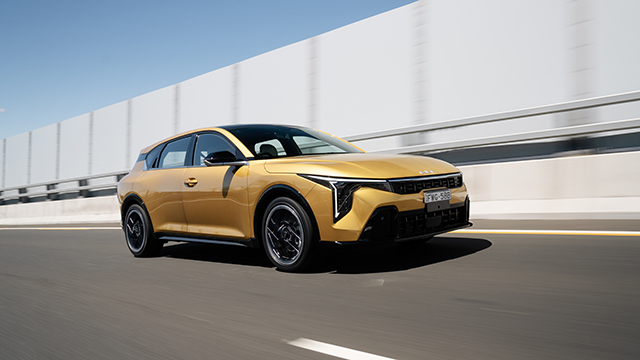
Given the Australian car-buying public’s increasing obsession with SUVs, sedans were supposed to have gone the way of the stegosaurus by now, but it hasn’t quite panned out that way. The Kia K4 became a sleeper hit when it was launched in January 2025, its combination of sharp styling and competitive pricing ensuring it was soon a frequent sight around the suburbs. Kia hopes the hatchback K4, which will replace the outgoing Kia Cerato, can enjoy similar success, but it’s entering a much larger pool of competitors than the sedan. Does it offer the right mix of looks, value and performance
How much does the Kia K4 cost?
The hatchback has the same pricing structure as the sedan. The four-model lineup starts with the S for $32,990 before on-road costs, while an S model equipped with a Safety Pack – necessary to qualify for a five-star ANCAP rating rather than four – pushes the price up to $34,190.
Above that are the mid-spec Sport ($36,690) and Sport+ ($39,090), while the top-grade GT-Line costs $43,790.
This makes the Kia K4 hatchback more expensive than the ageing Hyundai i30 ($27,500) and close to parity with the Toyota Corolla ($32,110). Compared to the Cupra Leon ($46,990) and Honda Civic ($49,900), however, it’s a veritable bargain.
All Kia K4s are covered by a seven-year/unlimited kilometre warranty. The GT-Line is more expensive to service than the lower grades, adding up to $3883 over seven years versus $3407 for the lower grades.
What is the Kia K4 like inside?
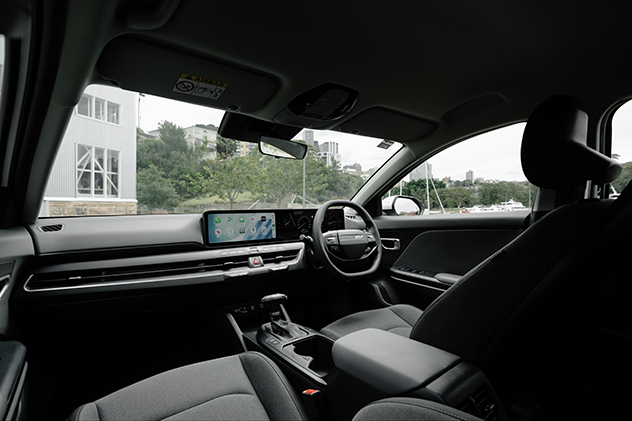
Plastic is the order of the day in the base model S – it’s everywhere, from the steering wheel to the armrest, and the word ‘cheap’ comes to mind. In addition to cloth seats and a gear shifter than belongs in 2015, it just doesn’t impress from a brand that used to trade off interior style. Some Chinese brands offer less budget-looking interiors for the same price or less.
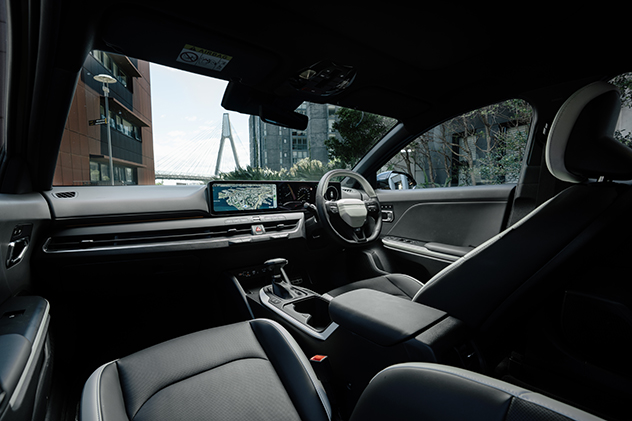
The interior treatment does improve somewhat as you move up the model grades, but faux leather upholstery and added trim elements can’t quite cover up the basic ‘canvas’ beneath. The touchscreen and driver display in a single expansive unit on the three higher grades almost seems to belong to another car.
Once you get past the less-than-sumptuous interior presentation in the S, however, many of the appealing traits that have come to define Kia come to the fore. The layout and ergonomics are excellent, with analogue buttons aplenty and seldom is there any call to fiddle around with a touchscreen unless you want to operate Apple CarPlay or one of the other apps.
Kia demonstrates once again that seats don’t need to have three different panels and 12 adjustments options to be comfortable if they’re just well-padded and sculpted to the right shape. The K4 has a nice driving position that’s not too high or low and one emerges from a couple of hours in the saddle fresh and free from stiffness.
The back seats are similarly comfortable and there’s decent leg and foot room for what is a comparatively small vehicle.
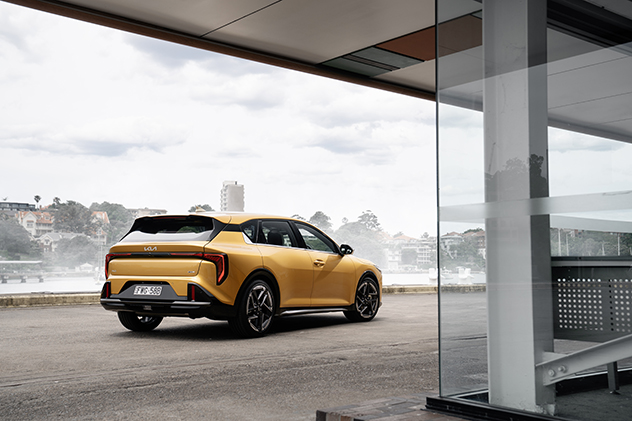
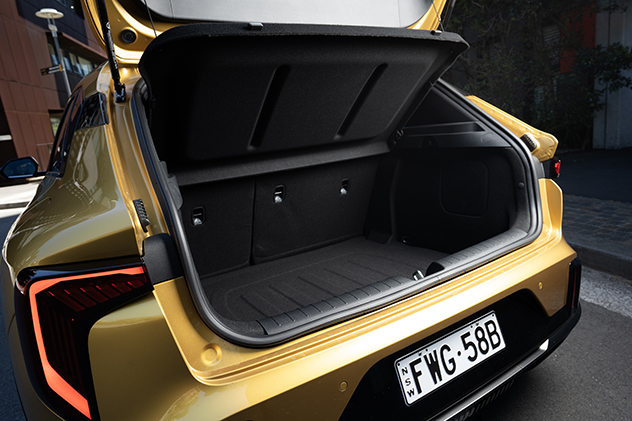
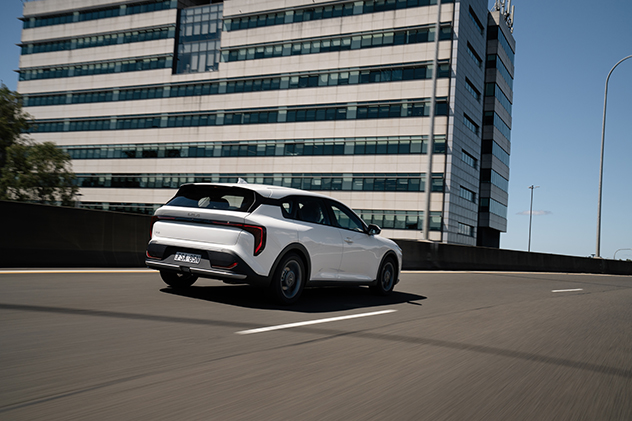
Cargo space is perhaps the most important measure and the K4 hatch compares favourably, both against the Kia Cerato hatch it’s replacing (438 litres versus 428 litres) and competitors including the Toyota Corolla (333 litres), Hyundai i30 (395 litres) and Honda Civic (409 litres). It’s something of a Tardis, actually – seen in side profile it looks like the Kia K4 will have a tiny boot, but lift the door and you discover a wide and deep cargo area that still manages to preserve room for a space-saver spare under the floor.
What equipment does the Kia K4 come with?
The base model Kia K4 isn’t what you’d call lavishly equipped for the price. It comes standard with 16-inch alloy wheels, keyless entry and start, dusk-sensing headlights, automatic high beam, a four-inch driver information cluster, four USB-C chargers, wireless Apple CarPlay/Android Auto, digital radio, a six-speaker sound system, Kia Connect, speed-dependent volume control and rear air conditioning vents.
The Sport model steps up to 17-inch alloys, the additional ‘Safety Pack’ equipment needed for a five-star ANCAP rating, the panoramic 24.6-inch digital instrument cluster and infotainment display, satellite navigation, dual-zone climate control and an automatic windscreen defogger.
Opting for the Kia K4 Sport+ brings artificial leather seats with heating, solar windscreen glass, rain-sensing wipers, an auto-dimming rearview mirror, satin silver door handles with soft-touch inserts, an illuminated glove box, and a seat back pocket on the passenger’s side. The Sport+ also has the option of Honeycomb Yellow paint (on the hatch only).
Go for the full-fruit GT-Line and you’ll get a more powerful 1.6-litre turbocharged engine, 18-inch alloy wheels, multi-link (rather than torsion beam) rear suspension, fancier LED headlights and taillights, front fog lamps, artificial leather seats with GT-Line styling, eight-way power adjustable driver’s seat with memory settings, gloss black accents inside and out, a sunroof, three-spoke premium steering wheel with heating, ventilated front seats, ambient mood lighting, alloy sports pedals, a wireless phone charger and a premium eight-speaker Harman Kardon sound system.
Premium paint is an additional $600 on all grades.
— Kris Ashton
How safe is the Kia K4?
As mentioned above, the Kia K4 has a five-star ANCAP rating on all models except the base S, which only scored four stars. This is largely due to a shortage of active safety systems and an optional Safety Pack ($1200) will get it up to five-star specification.
What powers the Kia K4?
Previously the Kia K4 had two engine options: a 2.0-litre petrol engine (112kW/192Nm) mated to a six-speed transmission and a 1.6-litre turbo petrol engine (142kW/265Nm) with an eight-speed gearbox. The latter engine remains on the GT-Line, but the three trims below now get a revised Atkinson cycle 2.0-litre engine paired with a CVT gearbox. This means power is down slightly (110kW/192Nm) but fuel economy improves substantially from 7.4L/100km to just 6.0L/100km.
What is the Kia K4 like to drive?
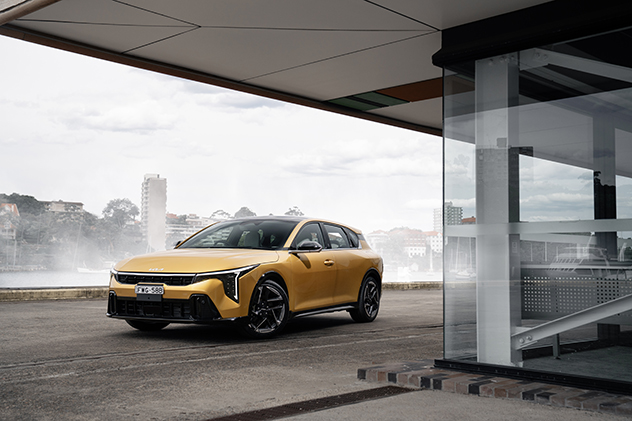
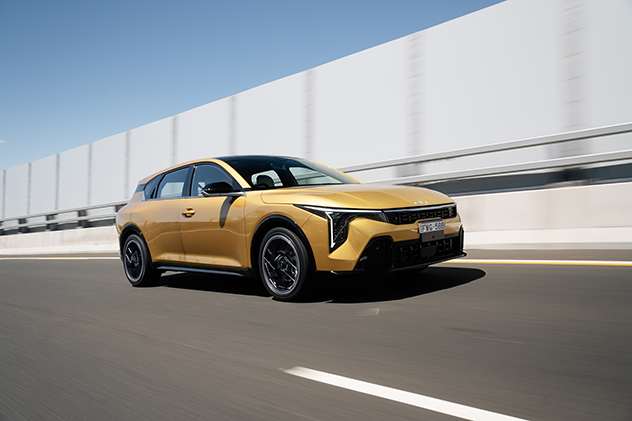
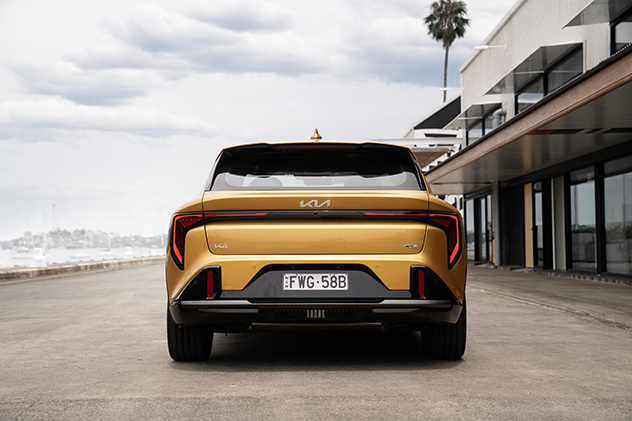
A big selling point for the Kia K4 sedan was its distinctive styling and the hatch, while perhaps not quite as eye-catching, doesn’t want for road presence either – especially in hatch-only Honeycomb Yellow.
The steering wheel is your first touchpoint within and, in all variants except the GT-Line, its plastic texture doesn’t make a great impression. This is especially true for the Sport+ – a cheap-feeling steering wheel in a $40k car just isn’t good enough. As mentioned above, though, general comfort and user-friendliness go a long way to atoning for the interior’s proliferation of petrochemical products.
The punchy 1.6-litre turbo four-cylinder engine has been in service a fair while now across the Kia and Hyundai stables, so it’s a known quantity – and if performance matters it’s the only choice in the K4, which means paying top dollar for the GT-Line.
The new Atkinson-cycle 2.0-litre engine with CVT transmission is another prospect altogether. Initial throttle response isn’t amazing but once you get higher up the rev range it has a fair bit of pull and it lopes comfortably along the motorway. For the most part the engine/transmission combo is smooth and quiet and only when you really drop the right foot does the engine flare and make a lot of noise without developing much power. A 6.0L/100km fuel consumption figure isn’t astonishing in the age of hybrids, but if it proves achievable in the real world it’s certainly a major improvement on the thirsty unit it replaces.
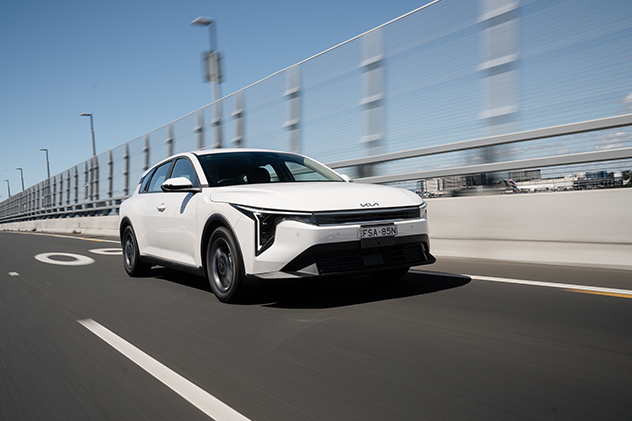
Ride and handling deliver exactly what we’ve come to expect from Kia – responsive steering and a slightly sporty feel, yet good bump absorption and no harshness or jitteriness on rougher roads. A sport mode in the lower grades provides weightier steering, sharper throttle response and firmer suspension if that’s what you’re seeking.
A well-insulated cabin keeps things quiet and, although the K4 does have the trademark Kia/Hyundai speed alert bing-bongs, they’re not as alarmingly loud as they used to be (although it’s still annoying to be electronically reprimanded for refusing to do 50km/h in a 110km/h zone because the speed sign recognition has made a boo-boo). The lane-keeping assistance is a little over-the-top in its intervention as well.
Open Road’s take on the Kia K4
The 2026 Kia K4 is a hard one to pin down. The hatchback adds a welcome element of practicality while retaining road presence, the new 2.0-litre engine pulls the K4’s fuel consumption into line with the rest of the market, and the typical Kia comfort and driving dynamics are evident. But the base model offers a 2015 interior at 2025 prices and, if you want anything approaching sportiness, you’re looking at $40,000+. Cross-shop with competitors carefully before committing to purchase.
What we liked
- Hatch has plenty of cargo space
- Generally refined drivetrains
- Excellent seat comfort and ergonomics
What could be better?
- Interior presentation could be better
- Only adequate power from 2.0-litre engine
- S needs safety pack for five-star ANCAP rating


