Charging your EV at home

Driving an electric vehicle means thinking a little differently about where, when and how to charge. The good news is that for most owners, charging at home is the easiest and most cost-effective way to keep an electric car topped up.
Home charging options vary in price, speed and installation complexity. Some EV drivers may only need a standard wall socket, while others may prefer a dedicated wall charger that can add more range in less time. Households with rooftop solar may also be able to reduce charging costs further by timing charging around solar generation.
What types of EV chargers are suitable for the home?
EV chargers are commonly grouped into levels. For most households, Level 1 and Level 2 charging are the most relevant. Level 3 and Level 4 chargers are generally used for public fast charging or commercial charging sites. Which one you choose depends on your EV and how long it takes to charge an electric car.
- Charging from a wall socket: Level 1 (single-phase AC)
- Charging from a home wall box: Level 2 (single- and three-phase AC)
- Charging from a public DC charger: Level 3 (DC) and Level 4 (super-fast and ultra-fast DC)
Charging from a wall socket
Level 1 EV charging
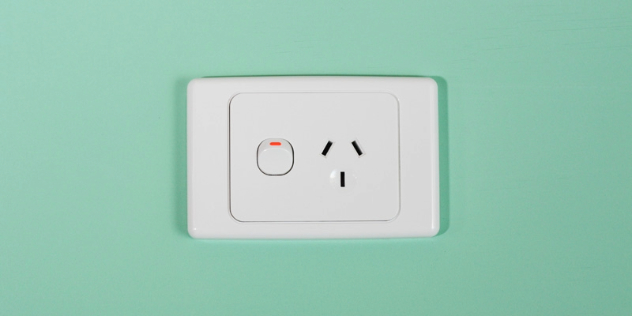
Level 1 charging uses a regular 240-volt wall socket and a portable charging cable, sometimes referred to as electric vehicle supply equipment, or EVSE.
This is the cheapest and simplest form of home EV charging. If you already have a suitable power outlet near where you park, you may not need any additional equipment or installation work.
A standard 10 amp wall socket will usually charge at around 2.4kW, while a 15 amp outlet can deliver closer to 3.6kW or 3.7kW.
That is slower than a dedicated wall charger, but it can still be enough for many daily driving needs. Allowing for charging losses and typical EV efficiency, Level 1 charging can add about 13km to 22km of driving range per hour.
For many drivers, that is more useful than it might sound. If an EV is plugged in overnight for eight to 10 hours, a standard wall socket may add enough range to cover several days of average commuting.
How much does Level 1 charging cost to install?
If you already have a suitable outlet near your parking spot, Level 1 charging may not require any installation cost beyond the electricity used.
If you need to install a new outlet, costs may range from about $200 to $1,000, depending on the distance from the switchboard, the condition of existing wiring, and whether any upgrades are needed to the circuit or circuit breaker.
Many carmakers provide a portable charging cable with a new EV, but not all do. A basic portable EV charging cable can cost around $400 to $600. Portable chargers with multiple tail options, such as 10 amp, 15 amp and 32 amp plugs, can cost close to $2,000 and may be useful for remote road trips or more flexible charging.
Extension cords should not be used with portable EV chargers. They are generally not designed for sustained high-amperage use over several hours.
Charging from a home wall box
Level 2 EV charging
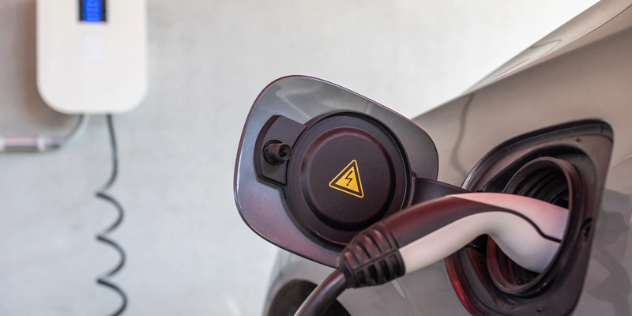
Level 2 charging uses a dedicated wall charger and circuit. It is faster than Level 1 charging, but it costs more and usually needs a qualified electrician to install.
Level 2 charging is commonly split into two types:
- Single-phase AC charging, typically up to 7kW
- Three-phase AC charging, typically up to 22kW
Level 2 single-phase
Level 2 single-phase charging is the most common home wall box option in Australia.
It uses the same broad single-phase electrical supply found in many homes, but draws more current than a standard wall socket. A typical single-phase wall charger can charge at around 7kW, which is roughly three times faster than a standard 10 amp portable charger.
For many EVs, a 7kW charger can add about 38km to 45km of driving range per hour, depending on the vehicle’s efficiency and charging losses.
How much does a Level 2 single-phase charger cost to install?
The wall charger hardware itself can cost from around $600 to $2,500, depending on the brand, features and whether it includes smart charging functions.
Installation can cost around $500 to $1,500, although the final price depends on where the charger is installed, how far it is from the switchboard, the home’s wiring, and whether electrical upgrades are needed. An electrician’s quote is the only reliable way to know the full installed cost.
Level 2 three-phase
Level 2 three-phase charging provides the fastest AC charging available for homes, but it is not suitable or necessary for every property or every EV.
A three-phase wall charger can deliver up to 22kW, although not all EVs can accept that much AC power. Many EVs are limited by their onboard AC charger, so it is worth checking the vehicle’s maximum AC charging rate before paying for a more powerful setup.
Where the car can accept 22kW AC charging, a three-phase wall charger can add up to around 120km to 130km of range per hour in a typical EV, after allowing for charging losses. A very efficient EV may add more, while a larger or less efficient EV will add less.
How much does a Level 2 three-phase charger cost to install?
Three-phase wall chargers often cost around $1,500 to $2,200, although prices vary by brand and features.
The cost can be the electrical work. Most Australian homes have single-phase power, while three-phase supply is more common in commercial and industrial settings. If your home does not already have three-phase power, the cost of upgrading can vary widely depending on the local grid connection, distance from the supply point, and whether power is supplied overhead or underground.
For this reason, three-phase home charging is usually best suited to homes that already have three-phase power, high daily driving needs, or more than one EV.
How to choose the best home EV charging solution
The best home EV charging setup depends on four main questions:
- How far do you drive each day?
- Where is the charge port on your EV?
- Do you need a new outlet, wiring or switchboard upgrade?
- Do you have solar or a home battery?
1. How far do you drive each day?
The first step is to work out how much range you need to add on a typical day.
The average Australian drives less than 40km a day. For that kind of use, Level 1 charging may be enough, particularly if the car can be plugged in overnight.
For example, if you can charge from a 15 amp outlet for eight hours, you may be able to add around 160km of range, depending on the EV’s efficiency and charging losses. That is far more than most daily driving needs.
However, drivers with longer commutes, irregular travel, multiple daily trips or regular weekend drives may prefer a Level 2 wall charger. It gives more flexibility and can add range much faster.
2. Where is the charge port on your EV?
Before installing a charger or outlet, check where the charge port is located on the car.
Measure the distance between the parked vehicle and the outlet or proposed wall charger location. The cable should reach comfortably without creating a trip hazard or being stretched across a walkway or driveway.
If the cable cannot safely reach an existing outlet, it may be worth installing a new outlet or wall charger in a more practical location.
3. Do you need new wiring or a switchboard upgrade?
Some homes, especially older properties, may not be suitable for EV charging without electrical work.
An electrician may recommend a dedicated circuit, a new 15 amp outlet, switchboard upgrades, load management, or a dedicated wall charger installation.
The simplest upgrade may be a new 15 amp outlet near the parking spot. A more capable setup may involve a dedicated 7kW wall charger.
4. Do you have solar or a home battery?
If you have rooftop solar or a home battery, a smart charger may be worth considering.
Some smart chargers can communicate with solar inverters and prioritise charging from surplus solar generation. That means the car can charge when the home is producing more solar energy than it is using.
This can reduce reliance on grid electricity and improve the value of rooftop solar, especially for households where the EV is parked at home during the day.
Charging your EV with solar power
Charging an EV from rooftop solar can reduce running costs and emissions, but it is important to size the system properly.
Solar output varies depending on location, roof angle, shading, weather and season. A solar system’s rated size is its peak output, not what it produces every hour of the day.
If household energy use and EV charging demand exceed solar production, the home will draw extra power from the grid unless there is enough battery storage available.
A smart charger can help manage this by detecting when a solar system is producing more electricity than the household is using, then directing surplus solar energy into the EV.

How many extra solar panels do you need for an EV?
Some households will not need to size a solar system to cover both the home and the EV from scratch. If there is already a solar system on the roof, the better question may be how much extra solar capacity is needed to offset the EV.
Using the example of a Tesla Model Y in Sydney that drives 12,000km a week using am average of 16.5kWh/100km:
- Annual EV energy use: 1,716kWh
- Annual output per 400W panel in Sydney: about 569kWh
- Panels needed for EV charging only: 1,716 ÷ 569 = about three panels
Allowing for charging losses, weather variation and real-world conditions, a household may want closer to four or five extra panels to help offset the additional energy used by EV charging.
This does not mean those panels will always directly charge the car. If the EV is not plugged in during the day, the solar energy may instead offset household use or be exported to the grid.