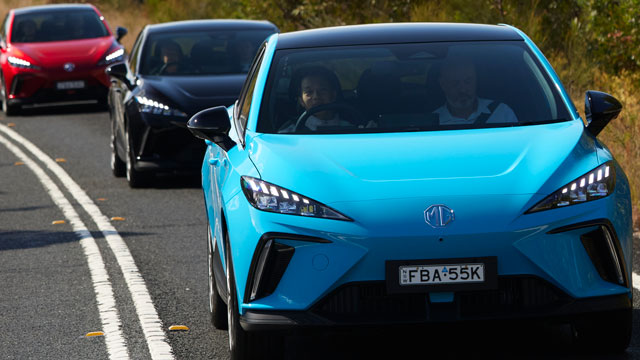
Buying a second-hand EV in Australia: what you need to know

If you're looking to go electric, but also hope to save money upfront by considering a used EV, you're not alone.
With the conflict in Iran sending fuel prices north, auction house Pickles reported its best month ever for EVs in March 2026. According to The Guardian, it saw a 20 per cent uptick in secondhand sales compared to February.
It’s another sign that Australia’s used EV market is starting to shift gears. Interest is growing, and for more buyers, a secondhand electric car is no longer seen as a risky leap, but a realistic and increasingly familiar option.
What do you need to think about when buying a secondhand EV? This comprehensive used EV buying guide will walk you through what you need to know, from battery health, port location, warranty, tyre wear, brake condition, grey import considerations, and software upgrades.

Check the battery and range, but don’t sweat it
There’s a lot of talk about EV batteries and whether an EV loses range with time, but data shows this is pretty minimal.
Auction house Pickles tested more than 1500 second-hand EVs and found the average battery State of Health (SoH) is 96 per cent. It also found that Australia’s climate, which is moderate for most capital cities, may contribute to higher than average battery health compared to other markets.
If you’re concerned about having to replace an EV battery, this is also less of a worry than some think. US-based EV data firm Recurrent Auto found just 0.3 per cent of modern EVs (made since 2022) have had battery replacements. That number climbs to two per cent for EVs made between 2017-2022, and to 8.5 percent for even older models. The takeaway: the older the EV, the higher than (still small) chance of needing a battery replacement.
Therefore, it pays to do due diligence when buying any used car, especially if looking at older models. That’s where The NRMA can help with an EV battery health check. We can come to you to complete the test within Sydney metro and Canberra – and for members there are significant savings.
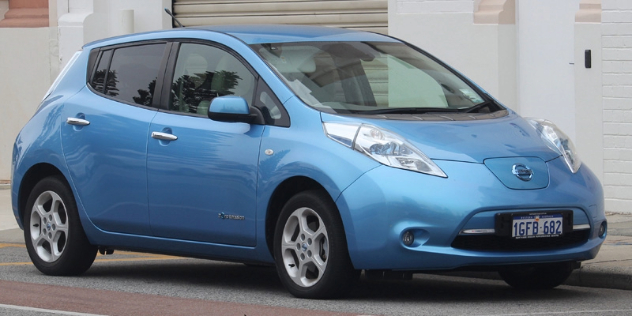
Buying a second-hand Nissan Leaf
In the case of the Nissan Leaf, extra caution should be used as this model does not have a liquid-cooled battery. This goes for models manufactured up until 2024 when its original incarnation was discontinued. This means that battery degradation can be greater than for other EVs.
The Nissan Leaf’s battery health is shown on the dash using a twelve-bar system, where each bar equals 6.45 per cent remaining battery capacity, but a more accurate reading can be taken using an app called Leaf Spy and an ODB2 device.
EV charging: Cable, plug type and port location
When buying a secondhand EV, make sure to check the original mobile charger (that plugs into a powerpoint) is included, if it came with one. In the case of a Tesla, ask if it includes both the 10 amp and 15 amp tail.
Also check which EV plug type it uses; Nissan and Mitsubishi (which sells plug-in hybrids) both use CHAdeMO DC plugs, which some newer DC fast chargers no longer support. All other EVs use CCS2 plugs which are supported at all public DC chargers.
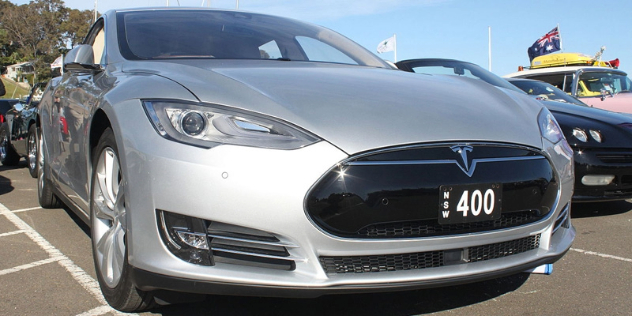
Older Tesla Model S and Model X may also need a port upgrade to CCS2 if they have Tesla's proprietary plug (now known as NACS.)
Very old EVs may also have a Type 1 AC port, which can charge at a top rate of 1kW, compared to 2.4-3.7kW with a Type 2 AC port (on either 10 amps or 15 amps.)
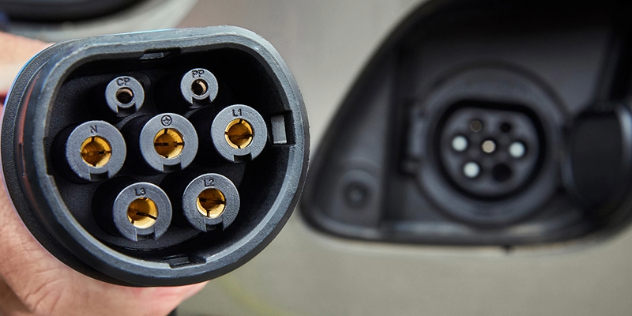
With a Type 1 cable, this means 40 hours to charge a 40kWh battery at home. For more information on plug types see here.
It's also a good idea to inspect the charging port carefully for any signs of damage or wear and tear.
Additionally, think about where you will charge your car, and park it if you have a driveway or garage. The location of the charging port might be a factor depending on your home setup or if you plan to use public charging stations frequently.
Electric car warranty
Warranties can vary significantly between manufacturers. Check both the manufacturer's general and battery warranty, if they are still valid and what it covers.
Also, inquire about any extended warranties or guarantees offered by the seller (if through a dealer.)
EV tyre wear
While EVs have fewer moving parts and therefore less wear and tear, the tyres are an exception. Due to the instant torque provided by electric motors, EV tyres can wear out faster than those on ICE vehicles.
A quick check to see if the tyre tread depth is looking thin and any signs of uneven wear could save you thousands in the short term.
EV brake corrosion
Brake corrosion, and brake pad condition, is less of an issue in EVs compared to ICE vehicles, but it's still worth checking.
EVs often use regenerative braking, which can result in less wear on the brake pads and discs.
However, this can also lead to corrosion if the brakes are not used frequently. A quick inspection can save you from potential issues down the line.
Tech and software upgrades
In older Tesla EVs (Model S and Model X), it’s also a good idea to check if the infotainment MCU (media control unit) has been upgraded.
MCU1 is based on Nvidia’s Tegra 3 chipset, and was used from 2012 to early 2018 and is prone to eMMC chip failure and slows down over time.
The MCU2 was introduced in March 2018, is based on an Intel Atom E8000 chipset so is faster, runs improved software, enhanced driving visualization, and has the ability to record from all cameras for DashCam and Sentry Mode.
Also, while some EVs can receive “over-the-air" software upgrades, some cannot. Be aware that this may mean having to take the vehicle to the manufacturer for upgrades.
Electric car grey imports
Some EVs on the market have been brought to Australia as parallel, or grey, imports.
This means they may need a language software update. If they haven’t you may be left to deal with this after purchase.
Redbook EV check
NRMA is partners with Redbook Inspect, a service which provides pre-purchase inspections for all vehicles – yes, including battery electric, plug-in hybrids and hybrids.
Inspections include diagnostics scans for fault codes, general checks on interiors, exteriors, under body and on charging components, CarFacts history checks, a road safety test and checks for accident damage.


You might also like