
What are the running costs for an EV?

The purchase price of an electric vehicle is for now still higher than an equivalent internal combustion engine (ICE) vehicle - largely because of the cost of making the battery.
Although manufacturing costs are set to come down as the world transitions to electric vehicles, the sticker price remains a concern for new car buyers.
But it’s worth considering - particularly if you are planning to buy a new car via a loan - that the lower running costs of an EV may offset the higher repayments.
How much energy does an EV use?
We are used to thinking about “fuel consumption” in terms of litres per 100 kilometres. The EV equivalent is kilowatt hours per 100 kilometres.
Average energy usage for most EVs can range from 120-260kWh/100km, and this can increase depending on external factors such as wind, rain, and hills.
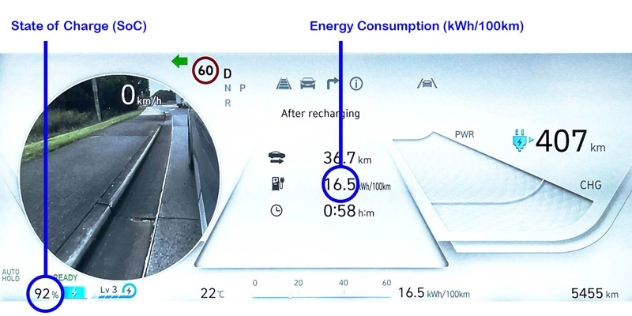
To understand how much power you need per kilometre, find the energy consumption screen in your EV’s interface.
For example, the energy consumption screen below from a Hyundai Ioniq 5 shows that it uses 16.5 kilowatt hours per 100 kilometres (kWh/100km). Some EVs might express this as 165Wh/km.
EV charging costs
The cost of charging an electric vehicle depends on how and where it is charged. Instead of paying in dollars per litre, electricity is charged in cents per kilowatt hour.
To calculate charging costs, it helps to know how big your battery is, and what the State of Charge (SoC) is – that is, how “full” it is, from 0 per cent and 100 per cent.
For example, if your EV battery is 50kWh and 40 per cent full, charging it up to 100% will require 30kWh of energy.
Then, it is as simple as multiplying the charging cost by how much energy you need. For example, if a charger is 50 cents per kilowatt hour, the cost to charge to full will be 30kWh x 50c, which equals $15.
Charging at home
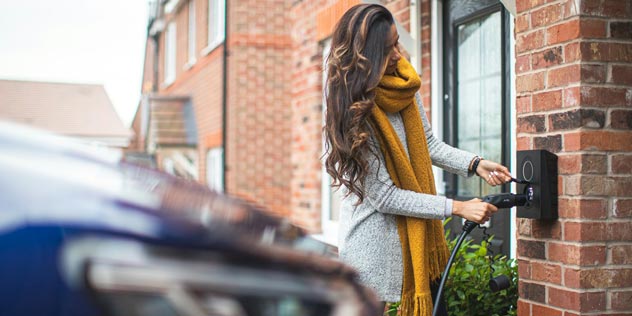
How much it costs to charge at home depends on your electricity tariff plan, and whether or not you have rooftop solar.
Some energy providers have specialised electricity plans for EV owners. They include various offerings from rebates on your energy bill, to free or discounted charging between certain hours.
If you have rooftop solar, it is also possible to set your EV up to charge only when there is enough power being generated by your solar system. In this case, the energy is effectively free.
You can reduce your at-home charging costs by using in-built charging schedules or installing a special home charger that starts charging the car when there is excess solar power.
Charging at an AC charger
AC “destination” chargers are typically available for public use at locations like shopping centres. Sometimes commercial premises like hotels, motels, pubs or restaurants install them to attract EV owners.
Typically, an AC charger may cost 14-30 cents per kilowatt hour, while AC chargers at commercial premises like motels may be free for the use of guests.
Booking accommodation on a road trip that offers free charging to EV owners can be a handy way of reducing your travel costs.
Note, most AC chargers will require you to have your own cable. Commercial premises may have one you can borrow but it's best to call ahead and check.
Charging at a DC charger
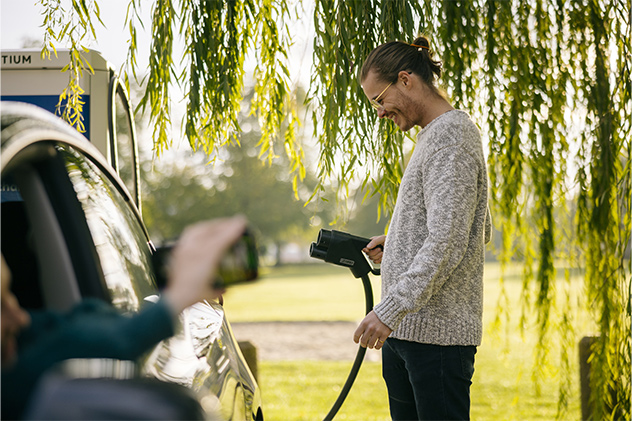
DC fast-chargers are the larger units that have thicker heavy cables attached to the unit (this is because the power load is high and the cables must be liquid-cooled).
They charge at a faster rate but you will pay for the convenience as installation and maintenance costs are higher.
Charging at a DC charger typically costs up to 60 cents per kilowatt hour. In some destinations, it can cost up to a $1/kWh, and some network providers offer discounts for motoring association members.
For the latest on NRMA’s national network and rollout of paid EV charging, see here.
EV maintenance and servicing costs
Most car makers generally advise BEV owners follow an annual service schedule to ensure they are safe to operate and to maintain factory warranty. Check your manufacturer’s recommendations and service schedule.
An annual routine inspection of all components (such as brakes, suspension and steering, air conditioning, lights and wipers, battery terminals, instrument warning lights and gauges, safety systems, tyres (including tyre rotation), a diagnostic system check, recall check and lubing of hinges) could cost between $200 and $400 depending on the manufacturer or service centre.
Given that BEVs use fewer moving parts than ICE, plug-in hybrid and hybrid vehicles – and don't require as many fluids in their operation (such as engine oil) – costs of these consumables are subtracted from your servicing bill as they no longer need to be replaced. Many BEV vehicles cost a little as 40 per cent to service as their ICE equivalent.
Unlike ICE vehicles (which require major servicing for their engine at predetermined mileage), each service interval for an EV will have the same parts checked over, so servicing costs should be stable over the lifetime of the vehicle. Many car makers offer a fixed price service schedule.
How much will a new EV battery cost?
EV battery replacements are a relatively rare occurrence. EV batteries are by far the most expensive component in the vehicles, but they are designed to last much longer than standard batteries in conventional vehicles. Most manufacturers offer 8 or 10-year or a limited kilometre warranty on the battery, exceeding the typical mechanical warranty on internal combustion engine cars.
The good news that the cost of making EV batteries is predicted to fall 40 per cent by 2030. This will also bring EV battery replacement costs down.
EV insurance costs
The Insurance Council of Australia says that on average, EVs are 18 per cent more expensive to insure. Factors around this include:
- Electric vehicles typically cost more to purchase
- The technology and parts in an electric vehicle are currently more expensive to produce and replace, specifically motor parts and battery
- The EV parts supply chain in Australia is in its infancy leading to higher costs
- There are fewer electric vehicle service centres around Australia that can repair electric vehicles, vehicles may need to be transported to a distant location to be repaired
- Repairing electric vehicles requires specialised training, and at present there are few trained people in Australia
- Dealing with damaged electric vehicle batteries is time and labour consuming. It also requires specialised equipment and disposal (recycling) methods
Depending on your personal situation, an EV might cost an extra $100-300 a year to insure, adding up to as much as $1,500 over five years.
These costs will come down as demand and then supply for EVs increases. However, in the meantime, expect to pay a premium on electric vehicle insurance.


