
How ANZAC heroes helped build the NRMA
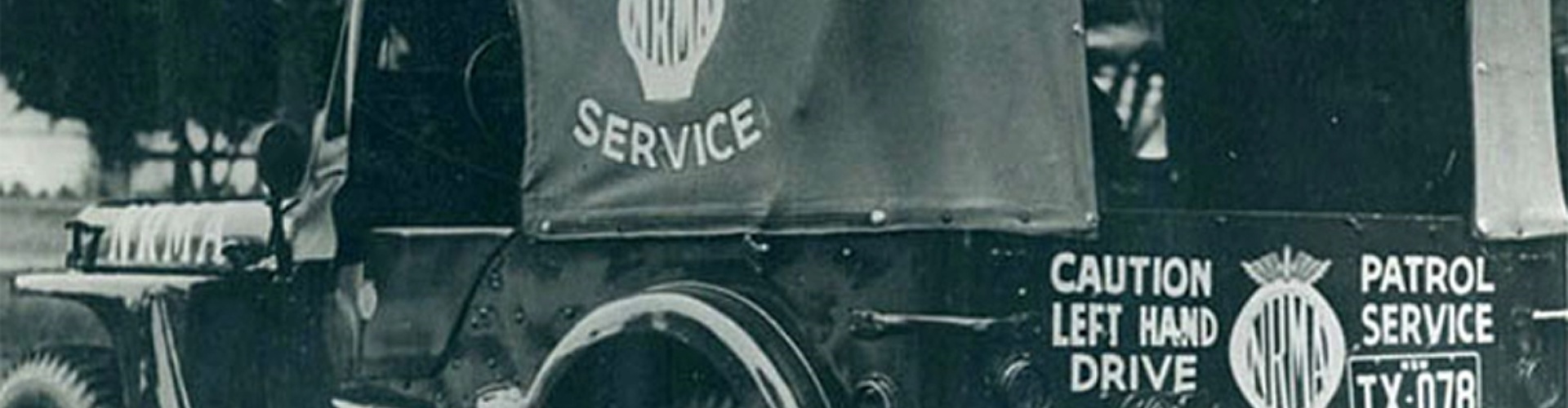
It is a little-known fact that the first NRMA roadside assistance patrols sent out in 1924 were comprised almost entirely of returned servicemen.
The freedom of the road, the discipline and dedication required for the role and the camaraderie that came with being part of a regimented team were all especially suited to ex-soldiers who couldn’t easily find a place in an office or factory.
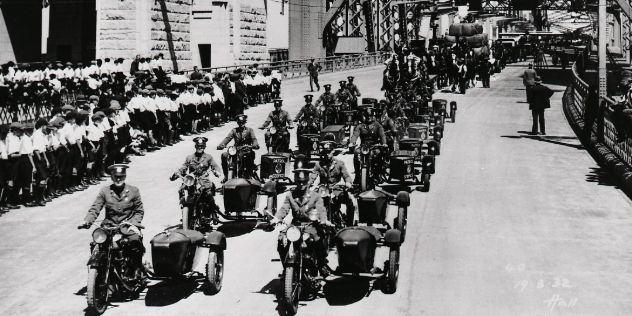
Image: NRMA Patrolmen leading the first drive across the Sydney Harbour Bridge at it's opening ceremony in 1932
This iconic image of NRMA Patrolmen riding in formation across the Sydney Harbour Bridge during its opening ceremony in 1932 speaks to the military instincts of many of these men, and only a few years later it would be further exemplified in their response to the outbreak of World War II.
The role of women in NRMA's war effort
Nearly half of all NRMA staff enlisted in the war effort, leaving a massive skills shortage to be filled to meet the needs of the organisation’s 66,000-plus members. This gap was covered by women who were initially trained in the basics of vehicle mechanics, so that they could become ambulance drivers. But many students easily excelled so a more advanced mechanical course was created to help meet skills shortages for roadside assistance.
Empowered by her training, NRMA Staff Member C– who scored very highly on her exams – organised a Women’s Auxiliary Transport Corps and successfully trained 506 women to handle trucks, ambulances and motorcycles throughout the war years. The Auxiliary transported military personnel and Hong Kong evacuees, plus transferred concert parties to and from military camps and issued road reports to defence authorities.
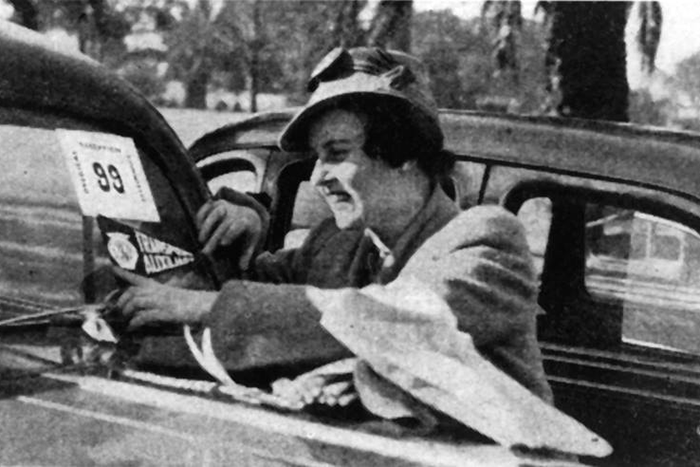
Image: NRMA pioneer Ms Kay Broadbent affixing a Transport Auxiliary sticker to a vehicle designated for service.
How NRMA helped in a fuel shortage
Not only did the Auxiliary play a part in the war effort, the NRMA provided a number of different services. A shortage of fuel saw the NRMA issuing petrol coupons. NRMA Patrol Jack Both told this story to the Open Road back in February 1984:
"We were allowed to give motorists a quart of petrol, just enough to get them off the road. Often we’d be called to a motorist, who had run out of petrol, only to find we’d already given him a quart some time before.
Some cars were converted to town gas, with a tank on the top that held the equivalent of one and a half gallons of petrol. Few garages had gas outlets, and many motorists had to drive to the gas depot at Motorlake. If you lived a long way out, you could just about empty your cars gas tank driving home from the depot.
At one stage during the war the government took steps to commandeer all the trucks that Australia would need in case of invasion. Owners had to present their trucks for inspection, and I was seconded to help the army decide when trucks would be useful, which were heaps."
How ANZACs shaped the NRMA fleet
Patrols operating in the central business district also addressed petrol rationing by using bicycles to travel from job to job.
When the war finished, a number of ex-service vehicles were trialled in the NRMA fleet, including army jeeps which were used into the 1950s.
The patrol uniform was altered, with the pants changing from jodhpur-style to straight-legged and a red ribbon added to denote service to the war effort.
The success of the Women’s Transport Auxiliary saw a new piloting service added where female drivers piloted country members through the city, which continued until the 1980s.
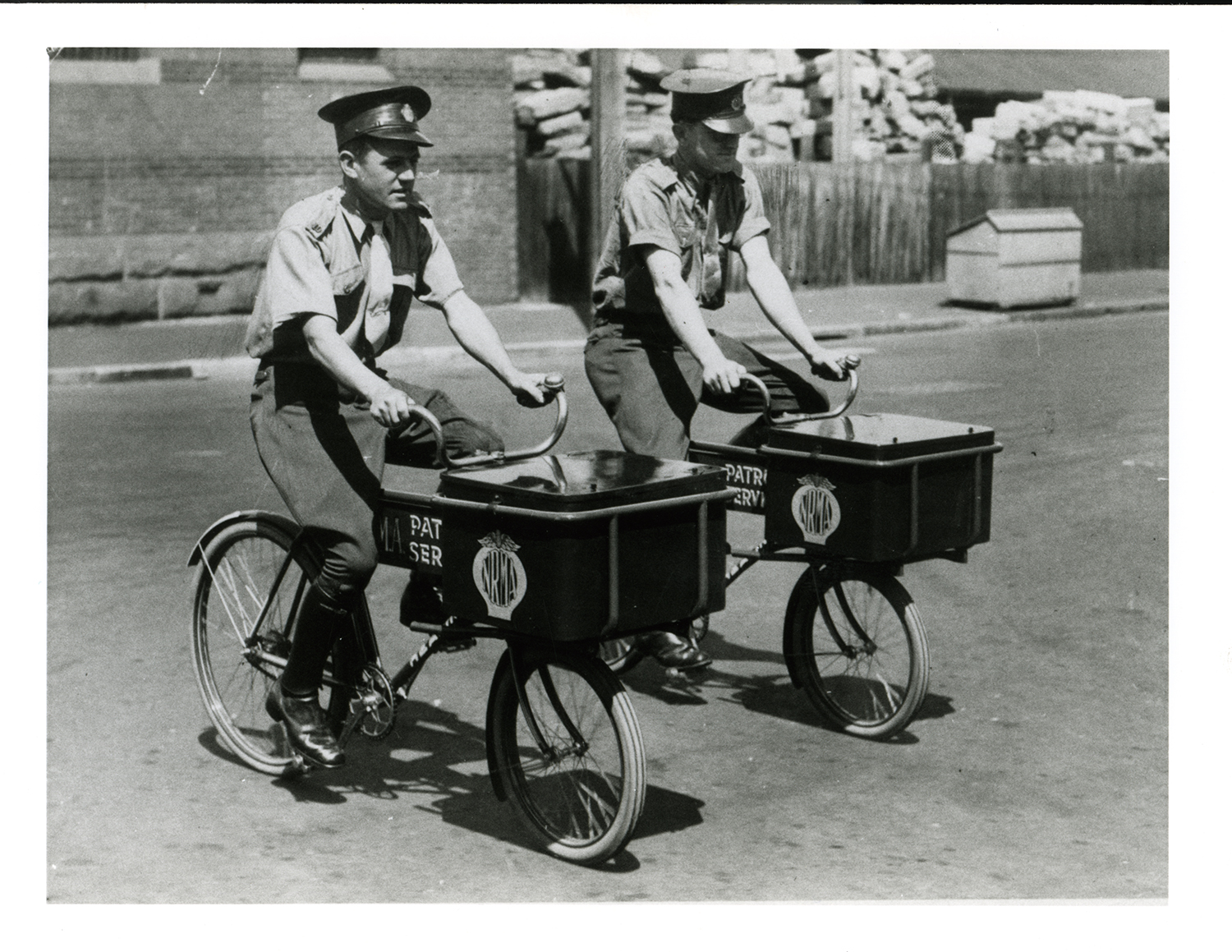
Image: Road patrol bicycles in Sydney CBD in 1944
George James - AA Sergeant to NRMA CEO
But the most enduring link was the ascension of George James from Australian Army sergeant in World War II to NRMA CEO in 1979.
This coincided with rapid growth in car ownership and NRMA Membership: we hit one million Members in the 1970s and were approaching two million Members by the time Mr James retired in 1987, after eight years in the top job and decades of service to the organisation.
Mr James passed away in February 2017 but his influence and that of so many other war veterans lives on in the NRMA’s ethos and actions.


