Have your say in the NRMA’s Rate Your Road survey

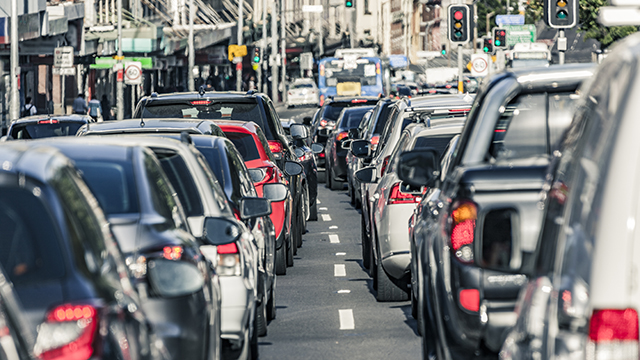
The NRMA is once again calling on the local knowledge of its 3.5 million members to identify the worst roads across NSW and the ACT, with the launch of a new Rate Your Road survey.
Whether it’s a chronic traffic snarl or a pothole that ambushes the unwary, Rate Your Road gives NRMA members a voice to get problems like these sorted.
From today, the NRMA is asking you to rate your designated road based on:
- Condition (potholes, crumbling edges, and rough pavement)
- Congestion (heavy traffic bottlenecks and slow peak-hour transit)
- Safety (crash risks, poor visibility, and hazards for cyclists or motorcyclists)
- Public transport access (connectivity issues alongside major corridors)
Have your say now
The NRMA last conducted Rate your Road in 2023, when more than 28,000 members took part – then a record for an Australian transport survey.
They nominated almost 11,000 NSW roads based on issues with condition, congestion and safety risks.
“The NRMA released the report in March 2024, a month before the NSW election,” said NRMA spokesperson, Peter Khoury. “Following the result [of the report], the NSW Government allocated more than $1 billion towards improving the state’s road network and an undertaking to consider a range of further NRMA recommendations.
“Traditional trouble spots on the Pacific Highway and Parramatta and Pennant Hills roads – prominent among those named and shamed in previous Rate Your Road campaigns – have dropped down, or off, the list due to the first-hand information members gave the NRMA.”
A key pillar of member advocacy
This survey forms a distinct part of the NRMA’s road-user advocacy portfolio, which includes the Road Funding Backlog report, the Business Motoring Survey and the School Zones report.
Mr Khoury says Rate Your Road is the “pinnacle of our community-led advocacy”.
“Rate Your Road works in concert with these campaigns by drilling down to granular level what street, thoroughfare or byway needs improvement and why.
“It is something that the NRMA uniquely provides, and the response is on a scale that cannot be ignored by decision makers.”
State and federal budgets have come to reflect this advocacy, and the effect of Rate Your Road has evolved beyond repairing road surfaces and filling in potholes (the NSW Government now even has a designated hotline for the latter).
“In the four years since the last Rate Your Road, game-changing infrastructure and corridor projects have commenced or been completed across our cities and regions, but much more needs to be done,” says Mr Khoury.
He cites a selection from across the NRMA’s six regions: the Pacific Highway bypass at Coffs Harbour, the M1 Raymond Terrace/Hexham, the Great Western Highway Medlow Bath/Hartley, the M12 Motorway, Mount Ousley Road, Dubbo Bridge, the Princes Highway Milton/Ulladulla/Jervis Bay, and Singleton Bypass.
“These projects alone represent almost $5 billion. There are many more currently in the works. All relieve stress on the roads to which NRMA members have given the thumbs down over the years,” he says.
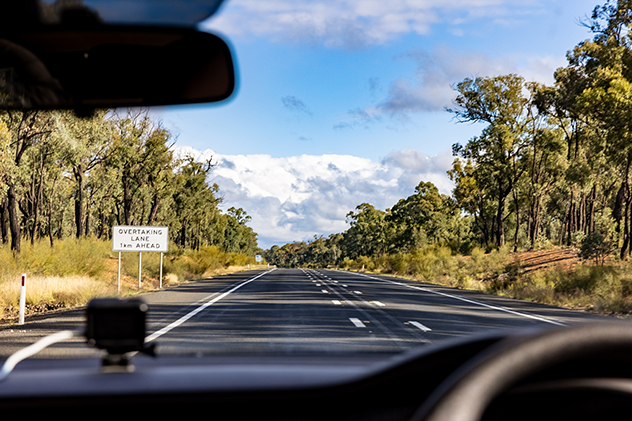
Rate Your Road has led to macro level change but remains essentially a grass roots campaign and an exemplar of community-led advocacy.
Perhaps the classic example came in 2015, when the residents of Holgate spoke as one to ensure that the long troublesome Wattle Tree Road was named as one of the worst roads in the state.
Availing themselves of that year’s NRMA survey, known back then as Seeing Red on Roads, this 7.8km rural road joined the likes of the Great Western Highway and the M5 in the list of the state’s worst 10.
“This was a resounding example of people power, of using the platform the NRMA provides to address frustration with inattention to this strip and ensure that local decision makers updated their list of road priorities,” Mr Khoury says.
“Maintaining and improving our roads saves time, money and, above all, lives,” Mr Khoury says. “The work of campaigning for the best outcomes cannot be done without your voice, so make that voice heard.”
— Peter Khoury, NRMA spokesperson
Are Australian roads getting worse?
Numerous variables could be leading to road deterioration, including total rainfall, a rising population, and an increase in the average weight of passenger vehicles.
The Bureau of Meteorology reported that 24 regions in NSW saw their highest annual rainfall on record in 2025, among them Gloucester, Grafton and Lismore. Sydney, by contrast, had comparatively dry years after a very wet period between 2021-2023. High rainfall will typically lead to more road damage, especially in areas subject to flooding.
According to the Australian Bureau of Statistics, the nation’s population increased by 412,500 in 2025 (and a similar figure is likely for 2026). Around 300,000 of those were immigrants as opposed to births, adding substantially to the total number of people of driving age.
An investigation published on the Open Road website in February 2026 found many popular car models are now at least 500kg heavier than they were in the 1990s, due to increases in size and more onboard technology. The popularity of SUVs and the electrification of cars is also leading to higher average kerb weights.
While American research in the 1950s found an increase in vehicle weight leads to an exponential increase in road wear (the so-called ‘fourth power law’), subsequent reviews of this research – most notably by the Australian Road Research Board in 1988 – suggested it applied to rutting of roads rather than the fatigue cracking that leads to potholes.
Back in June, Snap Send Solve (an app that assists the public in reporting issues with public spaces and infrastructure) said it received nearly 95,000 damaged road and pothole reports for the year to March 2026 – a 31 per cent increase over the same period for the previous year.
However, the total number of reports sent to Snap Send Solve for all issues (including rubbish bins, fallen trees etc.) also increased by about 16 per cent during the same period, meaning road damage would be reported more frequently than before.
Social media is also playing a role in bringing potholes to public and government attention, with the likes of Mahmoud Ismail on TikTok creating viral videos about road issues.
It is unlikely construction methods and materials used to make roadways are getting worse. Austroads continually updates its guidelines aimed at “supporting the development of design methods that are tailored to local environments, optimising performance and cost-effectiveness”.
On balance, it is probable that increased traffic, local weather events and more effective damage reporting are leading to the perception that Australian roads are getting worse, rather than a material decline in quality road construction and repair.
What causes potholes?
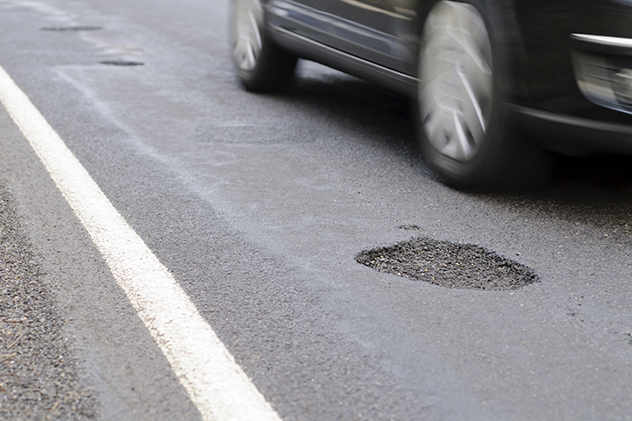
According to the Potholes Sydney website, a pothole usually develops when water gets into the road base, eroding it and removing support for the asphalt above. This creates a crack in the asphalt and as traffic passes over the crack, the asphalt breaks up. Tyres remove the crumbled asphalt and road base and damage it further, increasing the size of the pothole. Heavy rain is the most common cause of initial deterioration.
Why aren’t roads made more durable?
Several factors are considered in road construction and it’s often a delicate balance between cost, construction time, durability, and creating the appropriate surface for the expected traffic load.
Asphalt, an aggregate mixture of stone, gravel and sand, is the material most commonly used to manufacture public roads. Asphalt needs to be slightly flexible so it can withstand large changes in temperature and heavy vehicle loads without cracking, so its various elements are held together with bitumen. Over time bitumen can oxidise and become brittle, leading to small cracks that allow water ingress.
The benefit of an asphalt road over other materials is that minor surface repairs are quick and cost-effective. While a concrete road might last 30 years instead of 15 before it needs replacing and be better at withstanding heavy traffic loads, it is far more expensive and time-consuming to construct initially, repairs can be complex and costly (requiring the replacement of entire slabs), and the ride quality tends to be inferior.
Why do patched potholes deteriorate so quickly?
There are different methods of patching potholes. Jet patching (a mixture of bitumen and sand) and cold-mix patching (stone and sand held together with emulsion) are good for quick repairs to minor road damage.
However, neither of these methods performs well in wet conditions, and if it rains unexpectedly soon after, the pothole will likely open up again.
“It might be intended as a temporary repair to just make the area safe,” explains general manager (east) at Potholes Sydney, John Portelli. “Just putting cold mix in obviously isn’t advised, but to make the road a bit safer, they may do that. You'd rather have it filled with something than having it completely open, but then you risk it breaking up fairly prematurely and having to do it again.”
Hot-mix patching with asphalt works on much larger areas of damage and is applied at approximately 180ºC, leading to a more permanent repair that better withstands wet conditions. Downsides include a higher cost, a longer time frame, and more dangerous working conditions for road crews.
“A pothole generally is surrounded by good asphalt, in a lot of cases, so there’s no point doing the whole road, because that's going to cost a hell of a lot of money, resources, time, etcetera,” says Mr Portelli. “What we’re about is just trying to fix those individual potholes, but it’s complicated with traffic control. People don't like to have to wait. So, it's a kind of double-edged sword.”