Could artificial intelligence control traffic lights?
Artificial intelligence can already drive cars, and now traffic lights are next on the AI agenda, with the first-ever Australian trial set to be conducted in Queensland later this year.
A team of researchers at the Queensland University of Technology (QUT) in Brisbane, has been using AI for data mining and analysis of busy intersections since 2024.
The next phase of the project will see a camera set up at a low-traffic intersection in Moreton Bay, north of Brisbane, with images sent to an AI controller.
It’s hoped the controller will analyse traffic at the intersection and manage the phasing of the lights in real time to optimise traffic flow.
The $170,000 project is set to commence later this year and will continue until 2029.
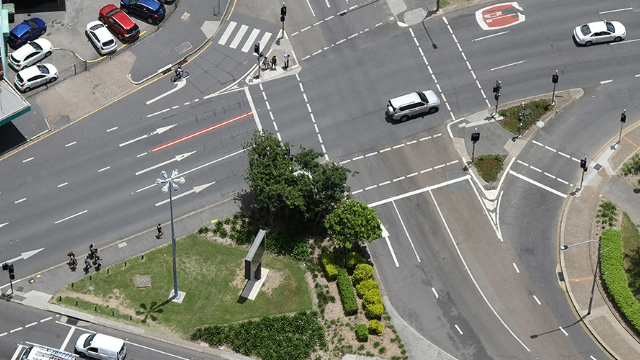
Australia’s current traffic light system utilises detectors imbedded into the road at intersections to manage phasing.
In Sydney, these detectors feed information to the SCATS (Sydney Coordinated Adaptive Traffic System) computer system, which analyses the data and aims to find the most efficient cycling of lights, both at individual intersections and across the network as a whole.
By contrast, it’s hoped the AI controller will be able to detect all road users – cars, trucks, buses, cyclists, pedestrians and so forth – and make better informed decisions about light phasing.
“Instead of focusing on being reactive to what’s happening, you can be more proactive, looking at the network-wide level or the corridor level and then make decisions at different intersections,” a member of the QUT research team, Dr Ashish Bhaskar, told ABC News.
But the trial is not only about alleviating congestion and making everyone’s work commute a little easier to bear.
One of the project’s stated goals is to “fundamentally transform the intersection operation across the world and lead to reductions in road fatalities, injuries and emissions in Australia”.
The team hopes to “unleash the power of artificial intelligence” and combine its analytical capabilities with existing modelling to better understand how and why crashes occur at intersections and thereby eliminate them.