Could Yamba become the new Byron Bay?

Comparing a product to one that’s already popular is a marketing tactic as old as marketing itself, so I’m unsure what to make of the increasingly frequent claim that “Yamba is the new Byron Bay”.
The road into this old fishing and oyster farming village bridges a number of river channels, more reminiscent of island-hopping between Taree and Old Bar than the suburban sprawl that heralds Byron’s beachside splendour. Canal-front estates on Yamba’s western fringe (a brand new one under construction on the left and an older one on the right) better recall Surfers Paradise than the trendy alternative lifestyle that put Byron on the map.
The ‘three zones’ of Yamba
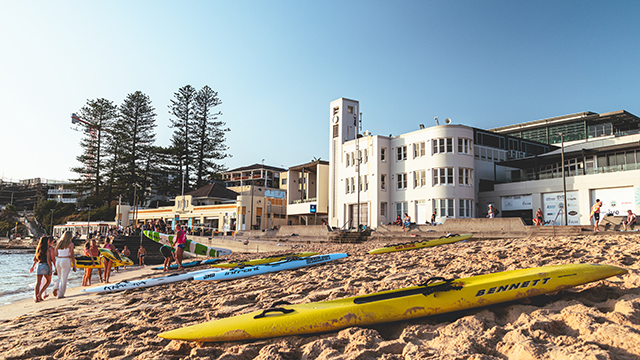
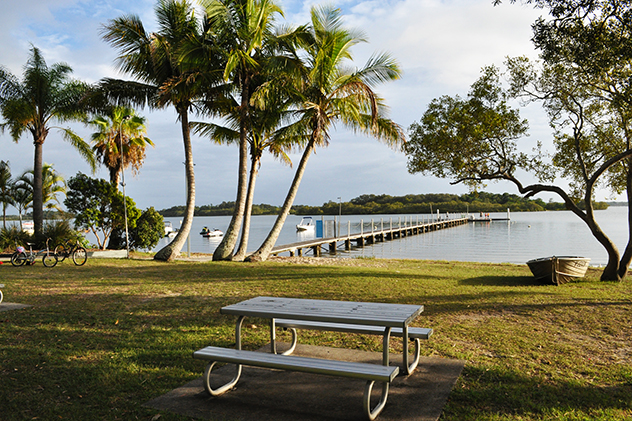
Once a seaside pocket at the tip of a secluded peninsula, Yamba now stretches 5km east-west across the entire southern head and exists in three distinct zones. Its western end is a pragmatic concession to modern life, with Coles, Kmart, McDonald’s and all the corporate conveniences city people would prefer didn’t exist while they’re on holidays. The centre section, home to the NRMA Blue Dolphin Yamba Holiday Resort, is all about the Clarence River and associated activities (including a small marina and fishing club), plus typical suburban businesses and an industrial area. On the coastal point is ‘old Yamba’, with its lighthouse, museum, war memorial and surfie vibe. It’s also where the most interesting changes are taking place.
Some sources suggest Yamba’s high season population could now be as many as 70,000, although during a summer visit you’ll likely be rubbing shoulders with fellow tourists – many locals flee to more peaceful surrounds in December and January.
Raw numbers are only one indication of Yamba’s ‘alternative to Byron’ rise in popularity. Bikes and bike paths are everywhere. Healthy-looking people jog Yamba’s beaches and esplanades each morning. Finding a café with an ‘ordinary’ menu can be a challenge. All that’s missing, I muse to myself, is outdoor yoga – and this is fulfilled when I see a sign for Salty Soul Wellness promoting sunrise yoga near Main Beach.
Is Yamba the ‘next big thing’?
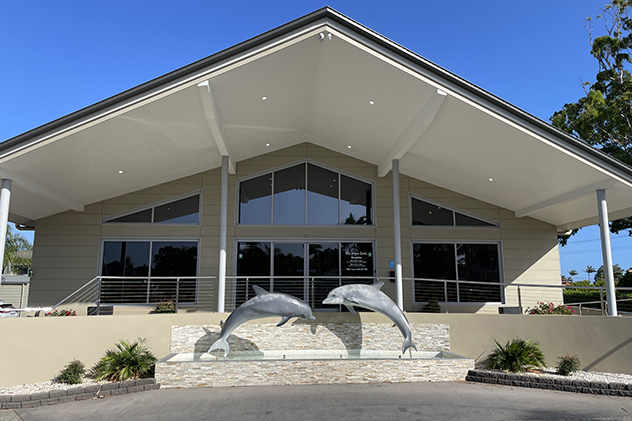
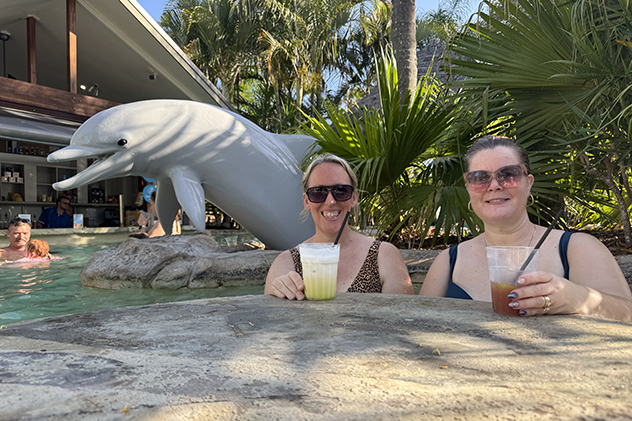
Is Yamba shaping up to be the next Byron Bay? It’s a question I put to Kish Dias, assistant manager at the NRMA Blue Dolphin Yamba Holiday Resort, while standing in the opulent reception area with its brace of leaping dolphins.
“This is my second [year] here and it’s gotten busier in that time,” he explains. “We’ve always been full, but we’ve seen demand increase.”
One of his colleagues quips that Yamba has installed roundabouts rather than traffic lights because residents don’t want it to become jammed like Byron. It’s an opinion I’ll hear repeated more than once over the next few days.
A good barometer of a town’s trendiness is the character of its main road. In that regard, there’s no question Yamba is a town in flux. We hoof it along Yamba Street and a few of its offshoots such as High Street and Coldstream Street and, while plenty of the coastal classics remain (ice cream, fish and chips), there’s an increasing sophistication to the businesses vying for the tourism dollar.
Browsing Yamba’s retail precinct
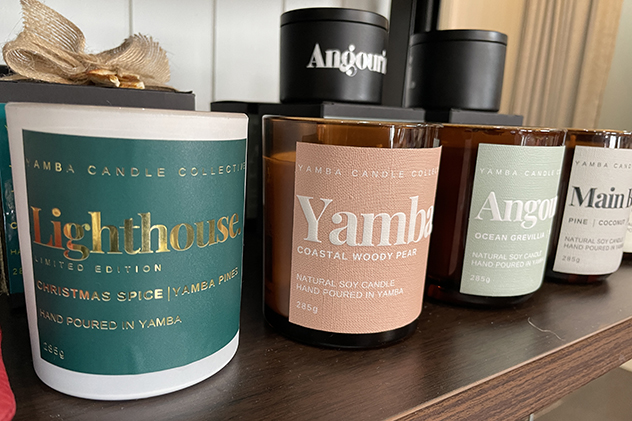
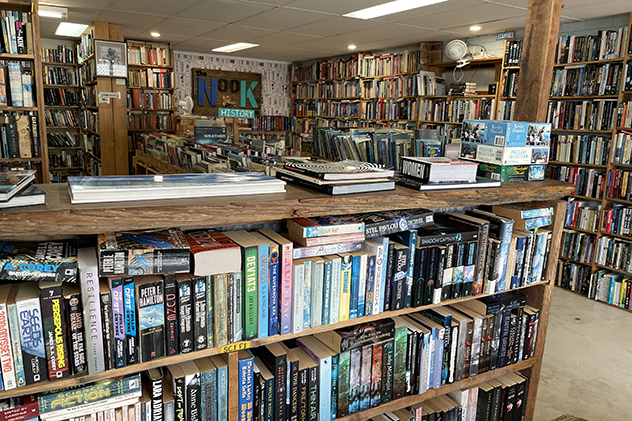
The Deli Yamba offers pasture-raised eggs, fresh fruit and juices, organic popcorn, and hemp seed oil. Podium Boutique sells fashion from Australian designers and homewares including scented candles hand-poured in Yamba. Tucked away at the end of an old arcade is The Nook, a second-hand bookshop with rustic décor and a reading space. Jacko’s Bar offers live performers on weekends, music bingo, open mike nights, and an extensive selection of drinks and eats.
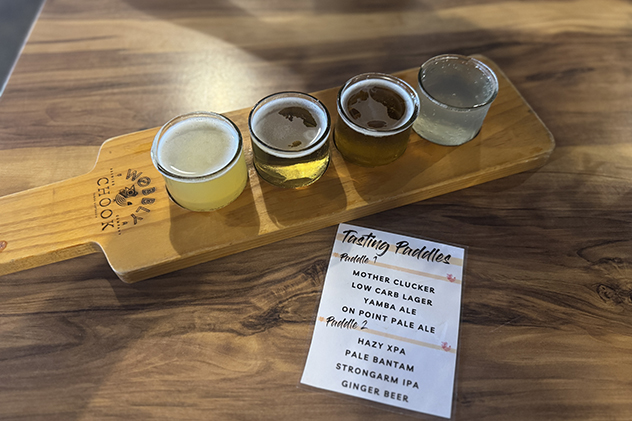
In the centre of town is Wobbly Chook Brewing. It spent many years as a backpacker hostel until COVID lockdowns killed off business and the owners, who had been toying with the idea of starting a brewery anyway, made the leap. It’s now a roaring success and on our lunchtime visit every table is packed.
Afternoon at Yamba Distilling Co
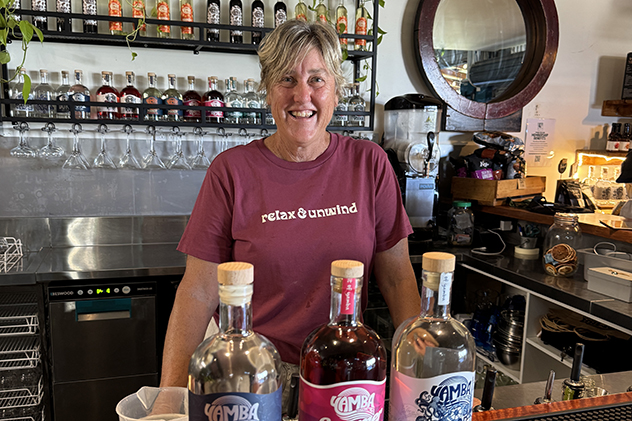
Microbreweries and distilleries are a sure sign of gentrification and Yamba enjoys an increasing assortment. Yamba Distilling Co, secreted like a family jewel in the town’s industrial area, first opened in 2020 before moving to larger premises three years ago.Proprietor Alison Sloley and her partner Adam Freeman lived in Adelaide all their lives, working in hospitality and building before deciding to make a lifestyle change. They travelled up and down Australia’s east coast between Melbourne and Airlie Beach, ultimately settling on Yamba. Starting a business in 2020 proved quite the challenge, of course, and thanks to COVID they ended up learning a lot of their early gin distillation skills via YouTube videos.
The original site was humble indeed, with tables for patrons set up in a carpark, but the current premises have indoor seating, a grassed yard with picnic tables, a new bandstand (which Adam built) for live music acts, and a ping pong table.
“The last few weeks are the busiest it’s ever been,” Alison beams. “Yamba has been really supportive. Every weekend it fills up with locals.”
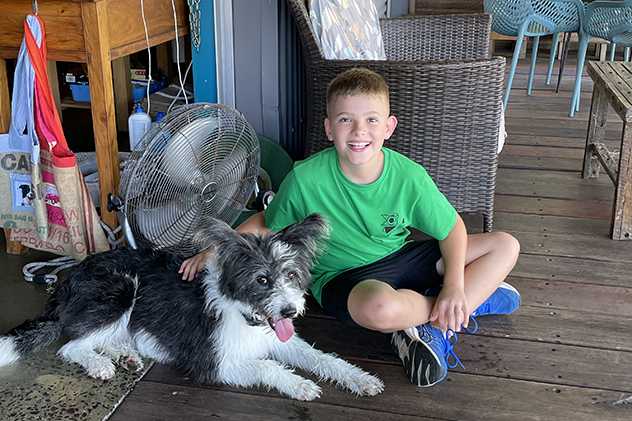
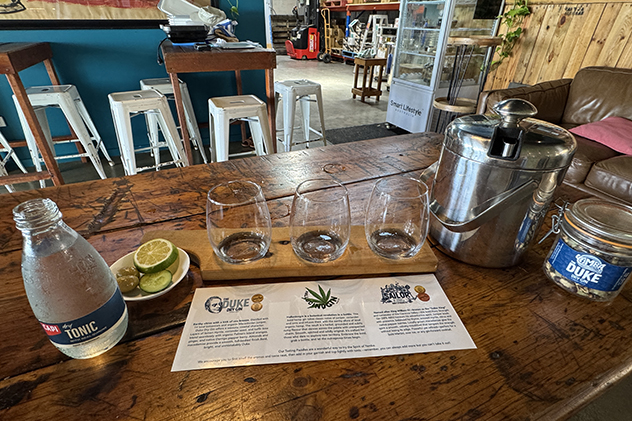
Yamba Distilling Co specialises in gin but also produces vodka and liqueurs. Tasting palettes are available, plus on certain days Alison will put together cocktails, mocktails and picnic boards. Soft drinks and a selection of local beers are also on the menu. Distillery dog Brodi, a Smithfield English with gremlin-like ears, loves nothing more than to chase his toy bone and encourages all visitors to throw it for him. His party trick is ‘playing table tennis’ – if you miss a shot, he’ll retrieve the ball and put it back on the table for the next serve.
Who are the people of Yamba?
People watching is another way to assess which way a town is tracking. In the warmer months, at least, most Yamba residents are tanned and beautiful. Few look as if they’ve made a new year’s resolution involving bathroom scales. It appears to be a split between swelling numbers of retirees and families making the most of the waning school holiday period. Scurrying between these thronging groups are the embedded locals: mainly tradies who seem like they’re dreaming about the swell off Main Beach and recent school leavers attending to café patrons and shoppers. While my son and I are sitting on the bored husband’s seat outside The Corner Store (designer clothes for women), a sun-wizened man in bare feet lopes past and trots into the Friendly Grocer next door. It’s certainly a curious and eclectic mix.
Yet Yamba remains far from pretentious and in many respects its ‘sleepy fishing hamlet’ roots prevail. Don’t leave your Sunday afternoon coffee run too late, for example, or you might end up buying one at McDonald’s or drinking Nescafe Blend 43 in your cabin.
Yamba: where history meets chic
Some small towns wallow in their history to the point of parochialism. Yamba, by contrast, wears it like a stickpin on an otherwise chic outfit – there to admire if you’re interested, but not the whole ensemble.
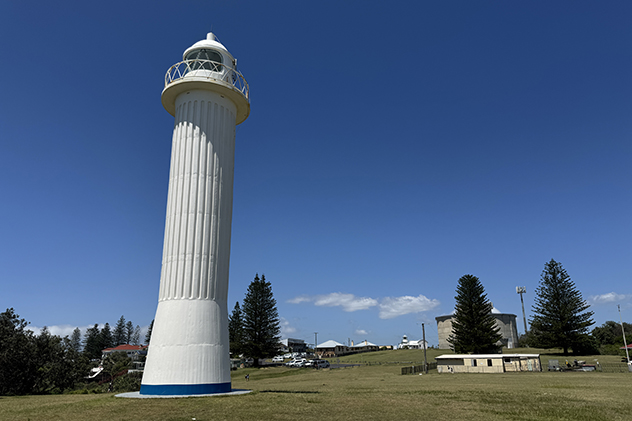
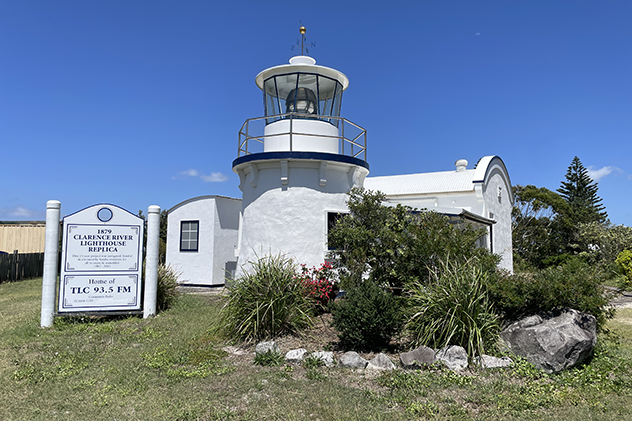
This analogy occurs to me when we go to look at the Yamba Lighthouse and, just up the hill, a replica of the smaller lighthouse that preceded it. The latter is a cute little thing, not much more than a cottage with a big glass lantern poking up from its roof like a turret. (It must have been almost invisible from the ocean on a stormy night – no wonder its much taller successor superseded it.) All it has in the way of history or explanation is a sign that proclaims it as an ‘1879 Clarence River Lighthouse Replica’ and that its now home to the TLC 93.5 FM community radio station.
If you do want to know more about these lighthouses and the rest of Yamba’s on-the-downlow history, the Yamba Museum offers everything you could want for a very reasonable entry fee (and kids are free). It’s here I learn about the town’s indigenous and colonial past, its oyster farming heritage, and its surf club which, founded in 1908, is one of Australia’s oldest.
This last factoid I glean from Vicki Jermyn, a retired healthcare worker who moved to Yamba a little over five years ago and now volunteers at the museum. “I’m a refugee from Sydney,” she laughs.
During her time in Yamba, she’s watched the town transition from traditional holiday hamlet to tourist mecca, but she doesn’t agree that it’s the new Byron. “Yamba doesn’t change much,” she insists, explaining that once the tourist hordes funnel back along the Pacific Highway the locals return and it’s just good old Yamba again. With one flood-prone road in and out, it’s probably not wise to grow Yamba to Byron-sized proportions anyway.
Appreciating old Yamba
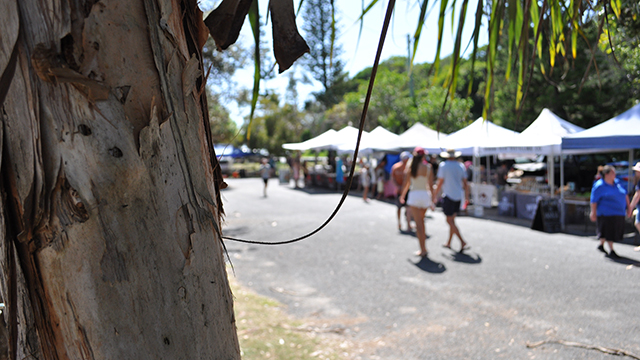
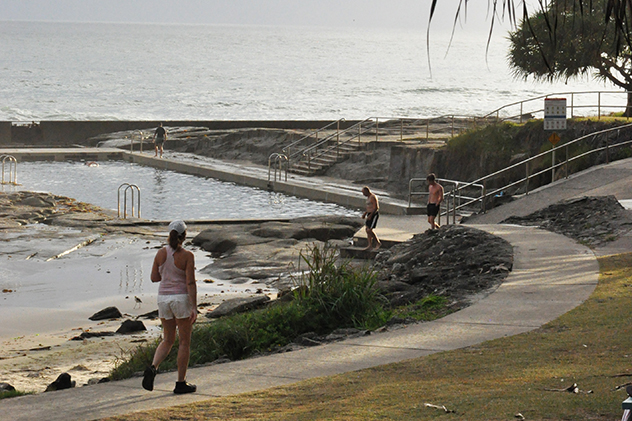
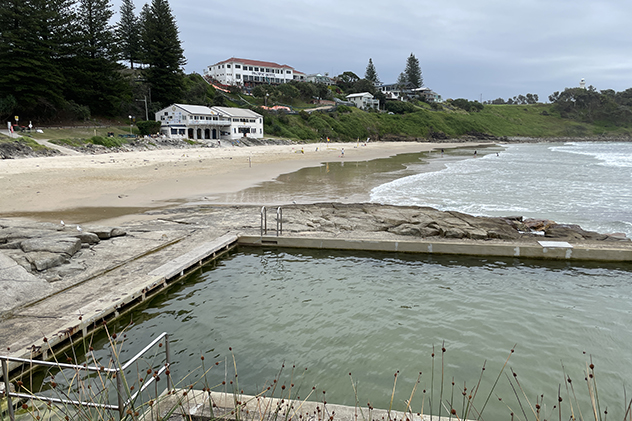
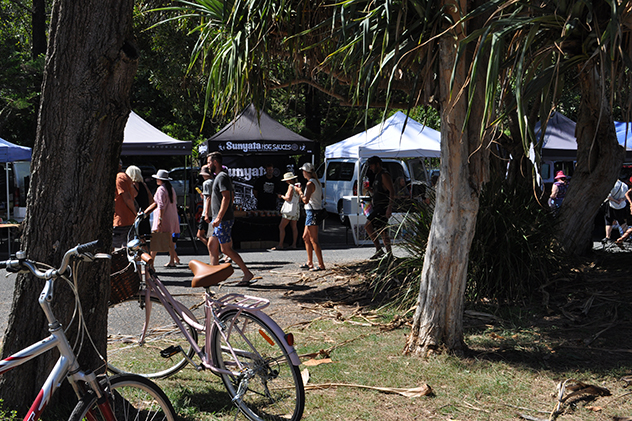
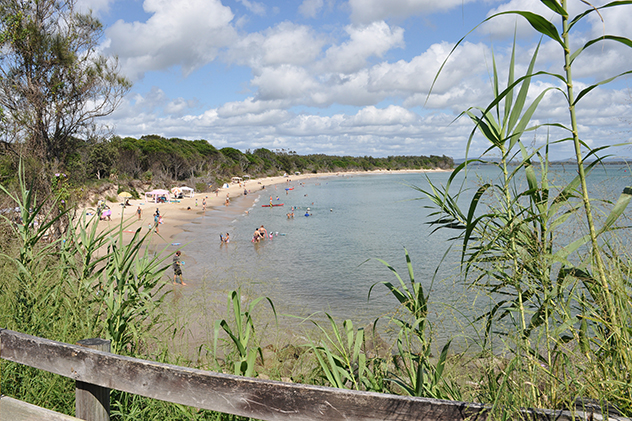
And there’s absolutely nothing wrong with good old Yamba, by the way. It offers far more than my family and I can hope to experience during our four-night stay – fishing off the Blue Dolphin’s riverfront jetty, launching ourselves from the rock ledge into the decidedly green waters of Angourie Blue Pool, bodysurfing waves on Main Beach or paddleboarding around the lagoon-like Turners Beach, enjoying a drink and the stunning ocean view from the cliffside Pacific Hotel, taking a cruise along the Clarence River or a ferry to Iluka on the northern head, getting close to nature on the Yuragir Coastal Walk, learning First Nations history and stories on the Lower Clarence Aboriginal Tourist Drive, visiting the nearby Scottish-heritage town of Maclean with its family tartan murals painted on countless telegraph poles, shopping at the weekly Farmers and Producers Markets.
Is Yamba the ‘new Byron’?
I conclude that calling Yamba “the new Byron” is selling it short, almost a diminutive. Residents, while far from reactionary, have no desire for their town to be the next pretentious coastal hotspot – and thus far Yamba seems to be holding onto its unique seaside charms while absorbing all the best qualities of modern coastal living.